
News & Stories
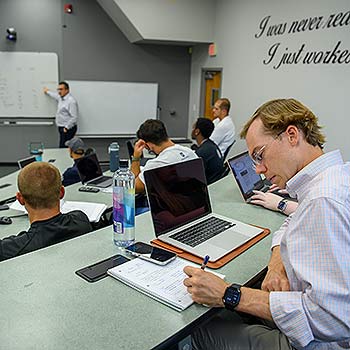
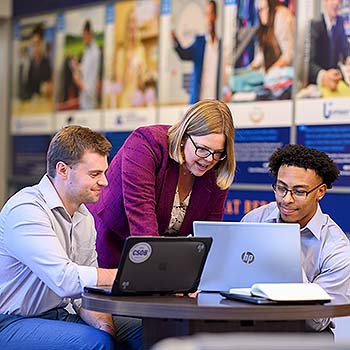
Male students working on laptops in the Campbell School of business with Wall Street ticker in the background
February 25, 2026

Choose an MBA That Maximizes ROI and Career Growth

Professionals seeking a competitive edge in the workplace often turn to a Master of Business Administration (MBA). Once upon a time, many businesses helped fund MBAs. In recent years, however, some employers realized they were funding an exit strategy rather than developing leaders.   

If you are considering an MBA and wondering if it’s worth the personal investment, there’s good news. Experts and higher education professionals report, yes! An MBA can still help you gain earning potential or leadership opportunities. In fact, a recent global survey by the Graduate Management Admission Council revealed that U.S. MBA and business master’s graduates are expected to receive larger starting salaries in 2026 than in previous years. But not all MBA degrees are alike. Keep reading to find out how to choose wisely. 

What is an MBA? Why pursue one? 
 

An MBA has been a cornerstone of business education since its origin in 1908. The degree is designed for those seeking leadership and management roles who could benefit from expertise in multiple areas of business.

Lauren Heller, a professor of economics and dean of the Campbell School of Business at Berry College, compares a high-quality MBA to a Swiss army knife or a toolkit of highly applicable business skills. The coursework in this degree should be less about memorization and more about synthesizing and applying accounting, finance, strategy, marketing and operations in real-world scenarios. For example, a strong MBA program will require significant group work and strategic thinking to mirror the experience of being a part of a corporate team.

${_EscapeTool.xml($imgAlt)}

“I really believe that the right MBA program is a future-proof degree. It requires higher order thinking skills beyond flashcard-like memorization and regurgitation that AI excels in,” says Heller.

Nancy Mercer, Berry’s MBA program director, also separates the level of work from that of the undergraduate degree: “An MBA goes beyond the foundational material and technical skills of an undergraduate degree. The goal is to prepare students to contribute meaningfully to business conversations and lead teams effectively. It’s participating at a higher level.”

Explaining further, Heller shared the experience of a select group of undergraduates at Berry College who observed MBA student class presentations. Both Heller and Mercer recalled the undergraduate students’ collective shock as they witnessed the high level of thinking and quality presentations of working professionals. The MBA students were prepared to meet a higher expectation, recognizing the reality of their work rather than just earning a grade.

HOW THE MBA LANDSCAPE IS CHANGING

 
Different types of MBA programs

There are several different types of MBA programs available to students whether they are working full-time jobs while juggling family life or finishing their undergraduate degree. There are online MBA programs, hybrid programs and full-time, in-person programs. Heller emphasizes the value of offering different models.

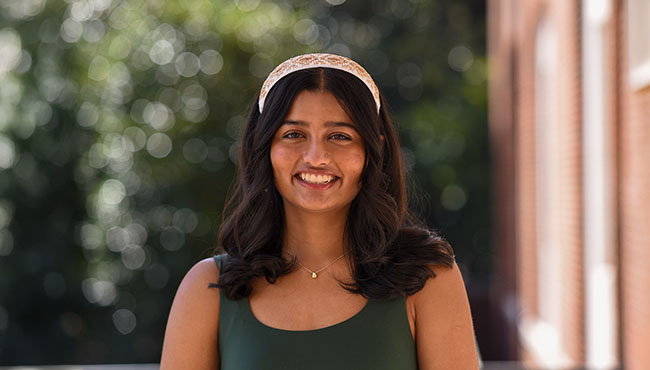
“At Berry, we have one student who needed the flexibility to say yes to a professional opportunity with her company in Italy. But then we have students who want to go deeper into business content right after college,” she explains. “They are still embedded in a more college-like environment and don’t mind continuing to study full-time. For those students, the in-person one-year opportunity is still really appealing.”

${_EscapeTool.xml($imgAlt)}

Still, Heller cautions students about versions of the degree that don't require some in-person interaction.

“We have redesigned our MBA to offer fully online coursework here at Berry,” she says, “but we believe even these students can benefit from real mentor relationships. Students may not be able to do one week on and two weeks off, so we have designed intensive residencies in retreat-like settings for deeper engagement.”

This model also simulates national corporate models where employees do not regularly work together in-person but may be required to travel to a central company hub for an all-team advance.

“This is not the emergency remote teaching of the pandemic,” says Mercer. “This model is intentional education with tailored experiences for students’ needs.”

Real-World Impact and ROI of an MBA

For those looking to quantify the value of an MBA, higher education experts suggest there are other benefits beyond the higher earning potential.

MBAs enable graduates to pivot into new roles and responsibilities with confidence. They also apply knowledge in practical ways. For example, a Berry MBA graduate reported saving their family business $200,000 because of insights gained in a single course.

Other graduates have gone on to buy businesses or take on further responsibility. ROI can be measured in salary, but it can also be measured in intangible benefits like confidence, credibility and expanded networks. Students who are looking to compare degree prices should not only consider cost but also the outcomes, accreditation and other long-term benefits of a program.

${_EscapeTool.xml($imgAlt)}

At Berry, the MBA program is diverse. With 59% of MBA students coming from outside an undergraduate business background, students gain significant perspective working with peers from a variety of industries and contexts with unique perspectives.

What are you looking to achieve?

To sum it up, the big question to ask is why are you interested in getting an MBA? Starting with your end goal in mind will help you decide which degree best fits your needs. Once you have your why, here are more questions to consider when deciding on the right program:

  • Are you really after a degree or just a certification?
  • Is it accredited by the Association to Advance Collegiate Schools of Business?
  • How do you feel about technology, and which model suits you best?
  • Are you interested in specific tracks or specializations?
  • Does mentoring matter? Do you feel excited to train under the faculty at the institution?
  • What other resources or relationships are available to you at this institution?

Want to learn more about the Berry College MBA experience? Reach out at BerryMBA@berry.edu.

${_EscapeTool.xml($imgAlt)}
 Back to Top