News & Stories
October 27, 2026

Spooky College Campuses, Berry and Spine-tingling Sense of Place

When it comes to telling ghost stories, college campuses are rife with reasons to be creepy. Historically, communities tell stories of paranormal activity for many reasons, including reinforcing moral norms and bonding through a shared adrenaline rush.

Many colleges have the perfect ingredients for haunted tales. A spooky story might keep students from entering unsafe parts of a building. A fantastical legend might foster initiation-like rituals with roots in campus folklore. Distinctive architecture combined with the tradition of telling ghost stories contributes to local lore.

${_EscapeTool.xml($imgAlt)}

Websites like U.S. News & World Report and College Raptor claim to list some of the spookiest campuses out there. We’re surprised Berry College hasn’t made the cut. Although Berry is not one of the oldest colleges in the U.S., its vastness and unusual mix of architecture have drawn Hollywood's attention. It proved the ideal location for eerie shows like “Stranger Things,” “Constantine” and “Edgar Allan Poe’s Mystery Theatre.”

Digging into “strange” architecture with an alum expert

Jeb Arp, Ed.D. — a connoisseur of historic architecture and a local real estate agent — researched prominent Berry ghost stories he heard as a college student. On his website, The Rome Home Journal, he relates the history of six longstanding tales and whether they have any roots in reality. We invited him to campus to talk about what inspired him to revisit these tales.

Tell us a little bit about how you are connected to campus.

I graduated with my undergraduate degree in 2004 and then a master’s degree in 2006. But my great-grandmother also went to school here, and I’m proud to call it my alma mater.

What inspired this research?

With a slow real estate market recently, I’ve been working on content around historic preservation and architecture, researching houses of Rome. As Halloween approached, I thought it would be fun to look at haunted houses of Rome. But as I did, lots of haunted Berry stuff came up. Some stories I had never heard as a student. When I saw this, I ended up in a bit of a rabbit hole and dedicated an entire article to haunted Berry.

What were the major sources for your research?

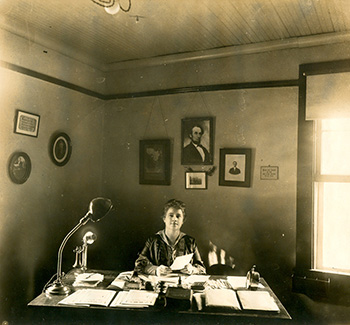
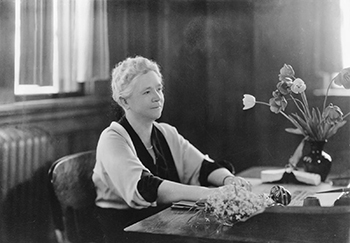
My main source for ghost stories and their histories was Campus Carrier articles and the archival material they referenced. For example, I had always heard Hoge was haunted by Martha Berry’s ghost. But I never knew the backstory written in a Campus Carrier article where a faculty member’s child had seen an old lady in Hoge and then later identified her as Martha Berry in a photo without knowing her significance.

${_EscapeTool.xml($imgAlt)}

That story was really interesting because the child who saw Martha Berry is now grown up, and we sold her childhood home just a few weeks ago. Reading about that was a really full-circle moment for me.

What do you think connects a story to a particular place at Berry?

Age helps explain Berry’s ghost stories. But architecture explains something more. Berry College isn’t simply old. It contains an unusually broad collection of environments in which history remains physically present. As a Berry alumnus, I’ve returned to campus plenty of times since graduation. One of the things I appreciate more now than I did as a student is just how architecturally strange Berry really is.

Places matter. Places anchor who we are, and they are connected to memory on campus. So, for example, take Martha Berry haunting the Hoge building. Whether or not she does, the fact that she’s positioned there reinforces campus ideology about work ethic, her dedication to the college and everything she stood for. It makes sense that she’s still in that building, making sure things are running smoothly.

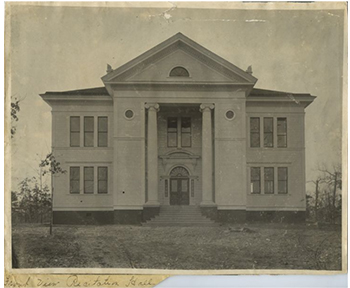
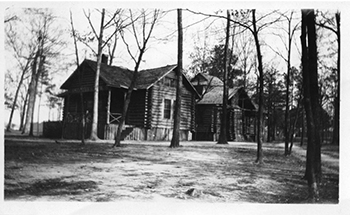
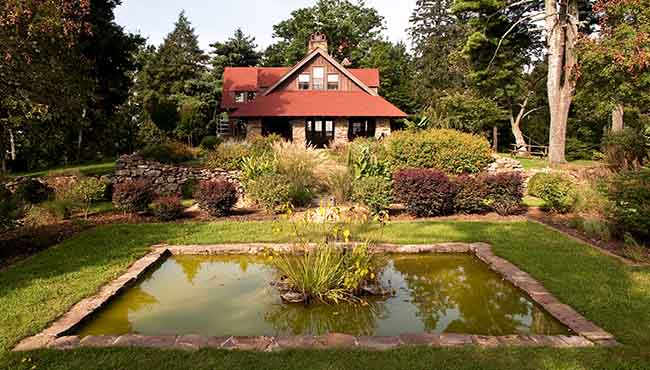
Roosevelt Cabin represents the school's rustic beginnings. Oak Hill preserves Martha Berry's domestic world. The main academic campus developed with brick buildings and the classical language American colleges often used to express permanence and institutional importance. Mountain Campus combines stone school buildings with almost rural isolation.

${_EscapeTool.xml($imgAlt)}

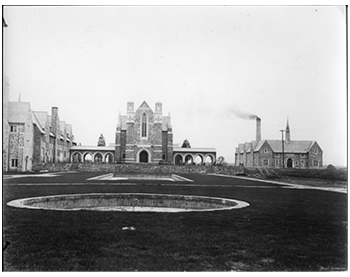
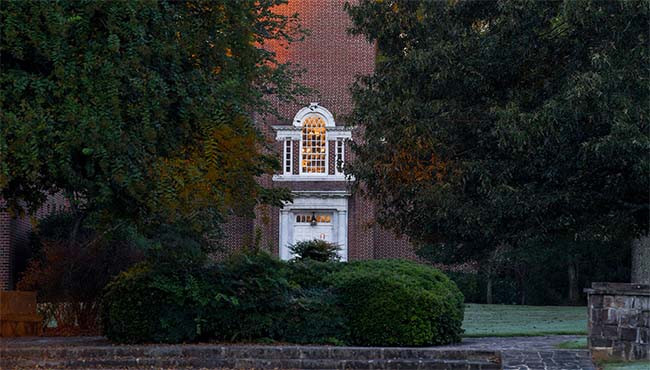
And then the Ford Complex, built in the English Gothic Revival style, appears like something transported from another country entirely. Architectural historian Robert M. Craig has described Berry as essentially three campuses with distinct characters. Walking or driving between them can feel less like moving across one college than moving between different periods in its history.

That matters because ghost stories depend on setting. These stories also preserve something that architectural histories sometimes don't: how people emotionally experience buildings. A floor plan can tell us how Mary Hall functions. A history can tell us who designed it. A ghost story tells us that generations of students looked up at a tower and thought something might be looking back. The ghost stories create another way of experiencing campus.

Researching this article gave me a kind of second Berry map. It isn't organized around classrooms or residence halls. It's organized around the places generations of students decided were mysterious enough to deserve a story. Some of those stories almost certainly aren't true. But folklore doesn't have to be factual to tell us something about architecture or place.

We preserve buildings with stone, brick and wood. We document them with photographs, drawings and archives. But we also preserve the experience of places through the stories people tell about them.

As someone dedicated to historic preservation, is there particular architecture you would encourage students to notice on campus?

Recently, as an executive board member of the Rome Area Heritage Foundation, I was visiting the Ford Buildings on the Georgia Trust’s Fall Ramble, and I realized I had never noticed the intricate carvings that are all over the Ford Buildings. They are stunningly beautiful works of art. I’d encourage students to walk around and take it in. I am just so glad they have been so well preserved. They are a really different type of architecture than anything else around here.

${_EscapeTool.xml($imgAlt)}

The power of place

Perhaps this anchoring to who we are and what a place means to us is why ghost stories appear on so many college campuses. They are a palimpsest of folklore, embodying the feeling of places that were once Civil War hospitals or American Indian burial grounds.

Students may arrive knowing little about the buildings that make up their daily walk to class. But, over time, they inherit a collection of tales that help explain the character of the campus they call home. Different generations of students may tweak the tales, but they serve the same purpose: connecting people to a landscape larger and older than themselves.

Berry's ghosts are an expression of that tradition. Its gothic architecture, stone walls, cabins and long stretches of road provide the setting, but the stories reveal that long after the details of college life fade, people remember the places that made them wonder.

${_EscapeTool.xml($imgAlt)}