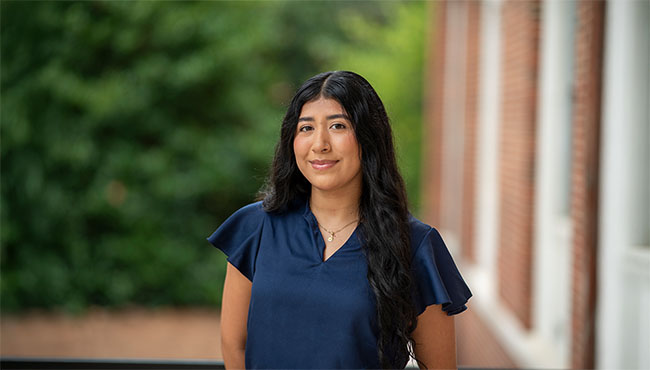
Sara Alexander ’26 knew early on that she wanted to help others. Diagnosed with lymphoma at age seven, she received support from a caring child life specialist who made a lasting impression. Today, Sara is a Ph.D. student in counseling psychology and school psychology at Florida State University.
“I am passionate about supporting underserved and at-risk youth to feel fulfilled, find belonging and thrive — both in their mental health and within academics.”
She says, “I am passionate about supporting underserved and at-risk youth to feel fulfilled, find belonging and thrive — both in their mental health and within academics. After graduating with my Ph.D., I’ll be working toward becoming a licensed psychologist and nationally certified school psychologist.
“While serving in the schools as a school psychologist, I hope to carve out my niche by implementing programs to support youth who have experienced bullying victimization. I also hope to offer counseling services to youth, with an emphasis on those with intellectual and developmental disabilities as well as Spanish-speaking communities.”
CAMPUS JOB AND RESEARCH
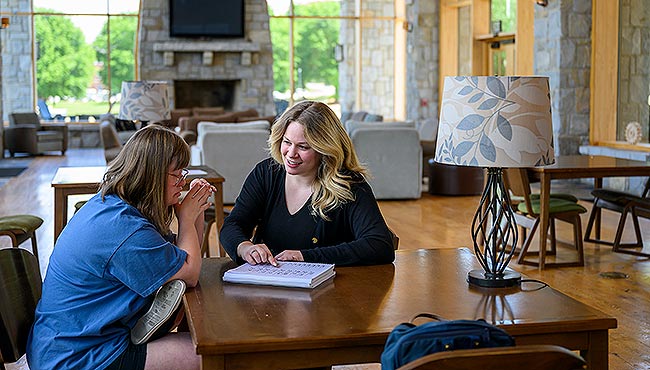
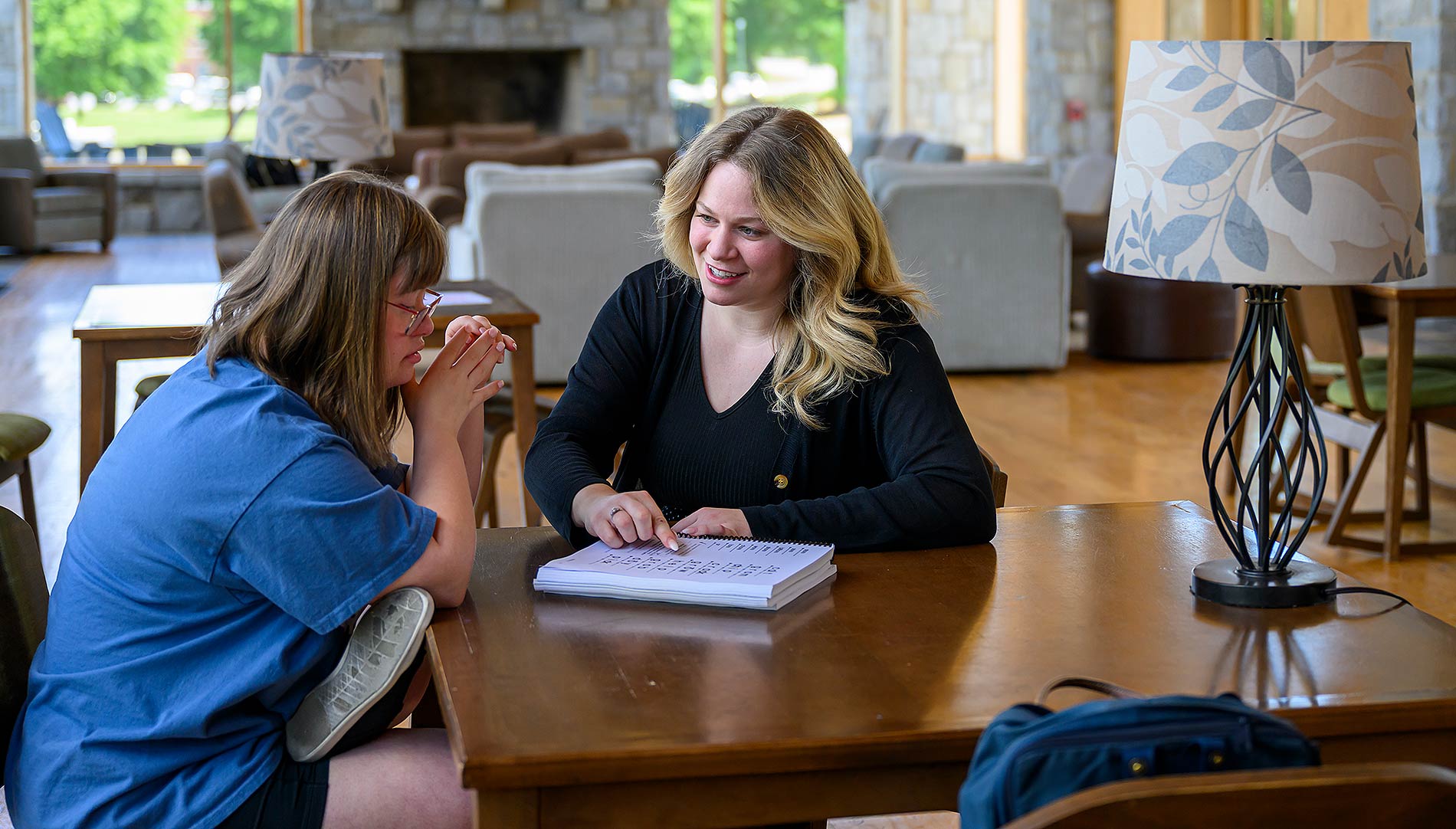
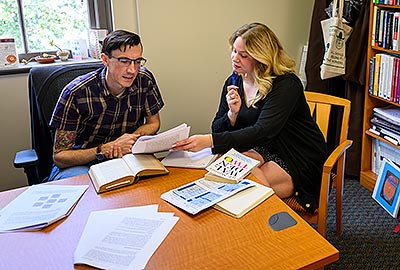
Sara came to Berry College as a nontraditional transfer student from community college and dove into campus life. She served as a lead peer mentor and assistant program coordinator in the two-year Inclusive Post-Secondary Education (IPSE) program. It’s designed for individuals 18–26 with intellectual disabilities. These students build academic, vocational and interpersonal skills so they can participate meaningfully in their communities.
Research became a strong interest because of faculty who “offered opportunities for collaboration and independent projects.” Sara teamed up with Kate Jarett, Emma Wilson and Associate Professor of Psychology Miguel Ampuero to develop the presentation “Behavioral Skills Training to Teach Consent Skills in an Inclusive Postsecondary Setting.”
“Despite being at much greater risk for exploitation than neurotypical peers, young adults with intellectual disabilities often have less opportunity and/or support to develop personal safety skills,” Sara explains. “After taking a self-defense class for women alongside one of our IPSE students, we noticed gaps in training and collaborated to form a training targeted at consent-related safety skills delivered directly for individuals with intellectual disabilities.”
CONFERENCES AND STUDY ABROAD
Sara attended eight professional conferences and presented at five. “I met incredible people, heard inspiring stories, learned so much, and walked away excited and humbled,” she notes.
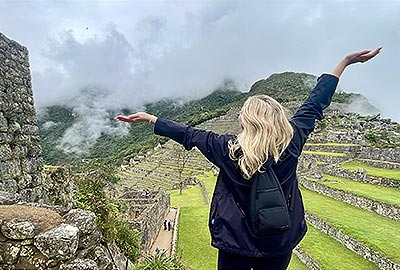
In addition, she received a Gilman Scholarship to study in Peru, which reaffirmed her “passion for service as well as the Spanish language.”
Publishing an article in Behavior and Social Issues capped off her senior year. She’s grateful to co-author Thom Ratkos, associate professor of psychological sciences, for “broadening my perspectives, demonstrating unapologetic honesty, showing relentless passion for improving society — and for the endless laughter.”
She adds, “If it weren’t for faculty support, I would not be on my current path of pursuing a Ph.D.”