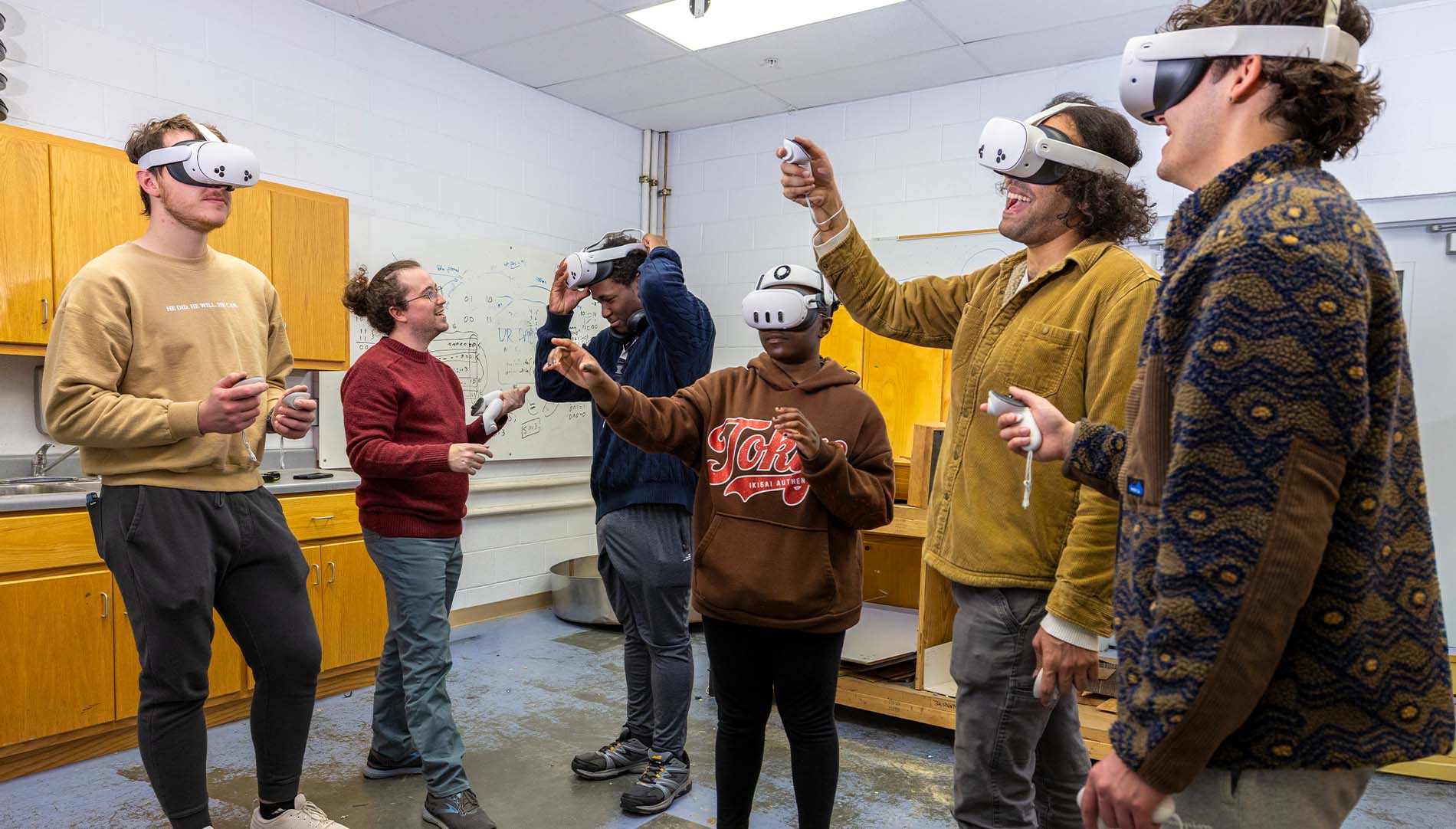
Although these examples of both AR and VR sound more like entertainment than education, they are both being applied in new and exciting ways in higher ed.
A famous example
One of the most accepted and well-known examples of XR use in the classroom is for medical training in orthopedics, neurology and laparoscopy. Research indicates that XR technologies improve learners’ surgical skills and procedural accuracy while reducing risks and operating room time.
Applying these outcomes more broadly, Bowers asks: “What does it look like to make XR part of the future of education? It’s exciting, building new ways to experience knowledge.”
Describing the applications of XR for future education settings further, Bowers discussed its advantages.
Simulation: practicing a skill repeatedly
This advantage is clear from the research studies, but it is applicable in any field, not just medicine. What would you practice if you could create a simulation of something? Imagine a music student being able to take piano lessons without having to own a keyboard or reserve a practice room. Or imagine a pre-vet major helping a cow give birth. The opportunities are endless for application, and students could practice more frequently and simultaneously using XR options.
Inaccessible experiences: applying knowledge to a space you cannot access
Want to relive a moment in World War II history? Want to dive into the depths of the ocean to identify deep sea creatures? Before XR, this was only accessible through travel or a time machine. But with XR, you can apply your knowledge immediately in places you’d never dream of seeing in person.
Experiential learning: putting knowledge in action
Taking a French test or even being in a French conversation club is nothing like navigating the streets of Paris for yourself. With XR, French students could practice conversational French — ordering themselves a croissant, finding their way around the Métro or asking for directions in a museum without ever going to Paris.
The Reality at Berry