- Appropriately high-performance level expectations.
- Significant time/effort from students over an extended period of time.
- Interactions with faculty and peers about substantive matters.
- Student exposure to diverse experiences or people and circumstances that are less familiar.
- Frequent, timely and constructive feedback.
- Periodic, structured opportunities to reflect and integrate learning.
- Opportunities to discover relevance of learning through real-world applications.
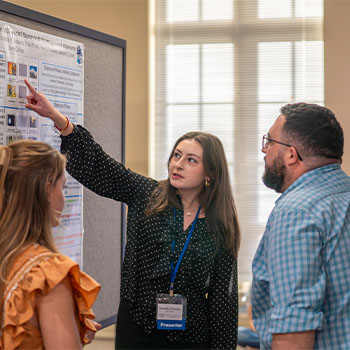
- Public demonstrations of competence such as conference presentations or performances.
As high school seniors imagine their next step and employers seek future talent, both are asking, “Is college still worth it?” New research from Brookings and the Association of American Colleges and Universities (AAC&U) answers this question with a resounding yes. Their findings offer an evidence‑based look at the value of a college degree today and what differentiates one degree from the next.
The economic return on a bachelor’s degree remains strong, but studies also reveal a growing expectation. Employers prefer graduates who have practiced and applied academic knowledge in real-world settings. Want to make your college degree worth the time and effort? Consider colleges that offer significant hands-on learning opportunities.
What is hands-on or experiential learning?
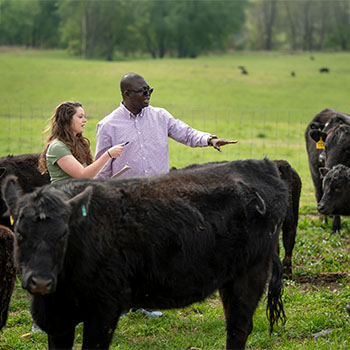
Terms for this type of learning vary. In general, however, they refer to applying classroom knowledge to real-world projects or situations. AAC&U researchers have identified eight “high impact practices” in hands-on learning. They’re characterized by:
In the article “The Agility Imperative,” more than three in four employers say they are more likely to consider hiring graduates with high impact practices. That includes individuals who:
- Completed an internship or apprenticeship (81%).
- Held a leadership role (81%).
- Engaged with a community organization or completed a community-based project (76%).
- Worked with people from diverse backgrounds or cultures (75%).
- Served as a peer mentor or advisor (75%).
While their confidence in higher education remains strong, employers consistently emphasize the need for graduates who can adapt, communicate, collaborate and solve problems in environments that change quickly. They want graduates who have learned to navigate uncertainty and apply knowledge beyond textbooks.
Don’t All Colleges Offer Hands-on Learning?
Hands-on learning experiences give students the opportunity to test their abilities in settings where outcomes matter. For example, internships reveal how theory meets practice. Research projects teach persistence and curiosity. Community partnerships help students understand the impact of their work on others. But how can you tell the difference between colleges that pay lip service to these types of programs versus schools truly preparing students for tomorrow?
Here are six things you should find if a college is dedicated to hands-on learning:
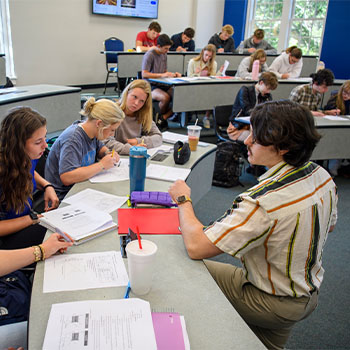
1) There’s a low student-to-teacher ratio with faculty engaged beyond the classroom.
Small classes allow opportunities for regular, thoughtful feedback and close mentoring. Teachers do more than lecture; they make time to follow student curiosity and answer questions. When faculty engage students beyond the classroom, they show care about the whole person, not just the grade.
At smaller institutions, classes average around 19 students. At Berry College, there is a 12:1 student-to-faculty ratio. First-year student reports place student-faculty interaction at Berry in the top 10 percent nationally, a signal of engagement beyond scheduled class time.
2) Student leadership, responsibility and handiwork are visible on campus.
When student accomplishments and responsibilities are on display in a variety of areas and levels at a college, it is clear that learning is being put into practice for real audiences. It also communicates that student work is valued and supported within the community.
For example, at Berry College, LifeWorks offers more than 1,000 paid roles across 180 departments with access to eight consecutive semesters of paid professional development experience. Students regularly supervise peers and run operations that serve real customers and units.
3) Academics are built around real problems with tangible outcomes rather than hypotheticals.
At a college where this matters, you will find project-based courses, maker spaces and community-engaged courses where students can turn theory into practice. They dream up real solutions that culminate in artifacts they can present, publish or implement.
4) High percentages of students engage in mentored research.
A strong undergraduate research culture means impactful mentor relationships, student grants, summer fellowships and public presentation of findings. They learn to ask questions, zero in on problems, set up experiments, analyze and interpret data, and make connections. Then, they learn how to share those findings with a broader community.
For example, 87% of Berry’s recent graduates said they completed a significant research or internship experience. We believe pressure testing your aspirations should be a part of every student’s journey.
5) Students talk about what they do, not just what they major in.
Want to know if a student practiced reflection in their coursework or if they really understand the application of their learning? See if they can talk about how they hope to use their college experiences. There is a significant difference between a graduate who can talk about a major versus one who can talk about how they aim to use their learning in the world.
6) The campus dedicates resources to high-impact practice.
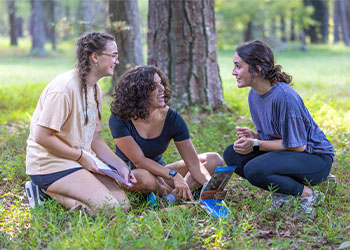
When an institution cares about giving students experiences relevant in the real world, it needs concrete resources. At Berry, it’s hard not to brag on this point. Situated on 27,000 acres in the Appalachian foothills, the Berry College campus is rich with native species, habitats and spaces to apply all sorts of learning. It’s often called a living lab.
Invest in your future
As the national conversation about the value of college continues to evolve, the quality of educational experience matters more than ever. The strongest colleges are those where students don’t just earn degrees; they build the confidence, experience and adaptability that employers expect. They are the ones where students don’t just earn credits; they apply what they learn in settings where outcomes matter. They test ideas, work alongside mentors, engage with communities and learn to navigate uncertainty.
Don’t look for a college that advertises “hands‑on learning” in name only. Look for a place where those opportunities are woven into the culture, the curriculum and the daily life of the campus. Want to see what that looks like in practice? Get to know Berry College.